


Background and Rationale Behind the Equal Education Campaign
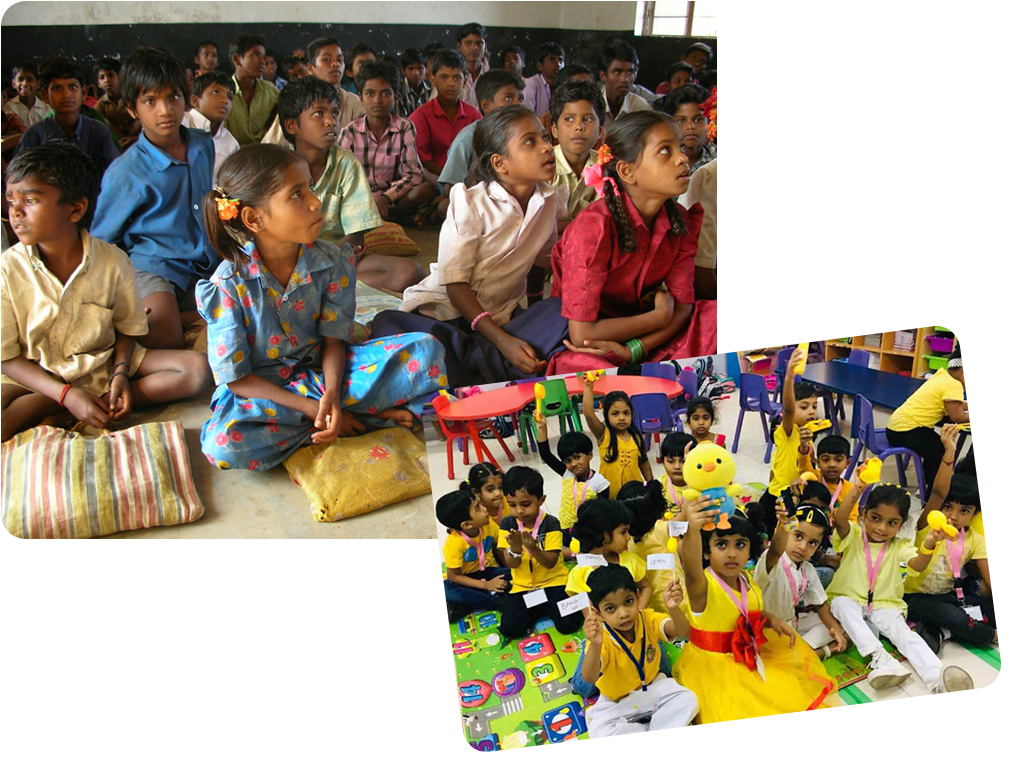
In today’s India, one of the gravest injustices faced by children—the very future of our nation—is the deep and persistent inequality in education. For millions, education remains the only viable path to a dignified life. Yet, when this path itself is riddled with discrimination and disparity, it perpetuates inequality in human dignity and opportunity. The divide in educational access, quality, and outcomes between children from privileged urban families and those from poor, rural, or socially marginalized backgrounds is not just a policy failure—it is a moral crisis.
Government schools, especially in rural areas but also in urban areas, often lack even the most basic infrastructure: adequate classrooms, trained teachers, functional toilets, clean drinking water, and safe learning environments. They also lack good quality teaching learning material, training to use the material, effective and age-appropriate pedagogy, career guidance, resulting in very poor learning outcomes. In contrast, private schools—driven by profit motives—offer modern amenities, better exposure, and superior learning outcomes, but remain inaccessible to the majority due to exorbitant fees. This commercialisation of education has created two separate worlds: one of privilege and promise, and another of neglect and exclusion.
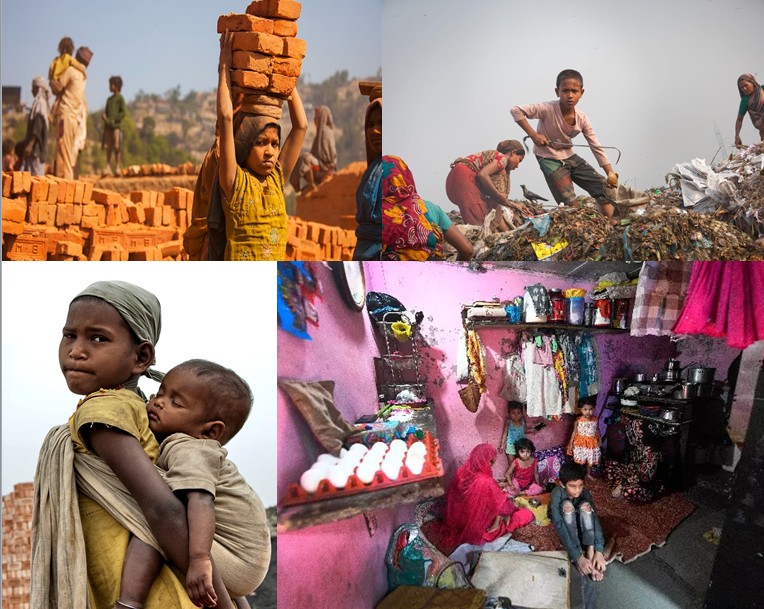
The inequality manifests in multiple dimensions:
- Rural-Urban Divide: Children in villages often study in schools lacking basic infrastructure and with minimal resources, while urban children from rich families enjoy well-equipped schools.
- Poverty: A child’s access to quality education is directly tied to their family’s financial capacity, leaving poor children with few options and fewer opportunities.
- Gender Bias: Patriarchal norms lead to neglect of girls’ education, compounded by unsafe school environments and lack of sanitation facilities.
- Social Backwardness: Caste-based discrimination continues to hinder access and inclusion, despite constitutional guarantees.
- Home Environment and Parental Support: Children from educated families receive encouragement and support, while others struggle without guidance or space to learn.
- Occupational Disadvantage: Migrant labourers and informal workers often cannot provide stable schooling or home environments for their children.
- Privatisation: The rise of private schools has commodified education, making it a privilege rather than a right.
The Equal Education Campaign emerges as a collective response to this crisis. It is a people’s campaign to ensure that every child—regardless of caste, class, gender, or geography—receives high-quality education and an equal opportunity to realize their full human potential. By working hand-in-hand with communities, educators, governments, and civil society, the campaign seeks to transform public education into a space of equity, excellence, and empowerment. Because in a truly just society, no child should suffer inequality.